

The Future of Automated Messaging is Here
Customer expectations have fundamentally shifted. Today’s consumers demand instant, accurate, and personalized responses around the clock. Rigid, rule-based chatbots that force users to type "1 for Sales" or "2 for Support" are no longer sufficient. To stay competitive, businesses need intelligent automation that genuinely understands natural language.
This is exactly why a WhatsApp ChatGPT API integration has become the most sought-after solution for developers and business owners in 2025. By combining the massive reach of WhatsApp with the advanced reasoning capabilities of OpenAI's Large Language Models (LLMs), you can create an autonomous agent that handles support, sales, and onboarding effortlessly.
In this comprehensive guide, we will explore the architecture, logic, and strategic implementation of building an AI-powered WhatsApp chatbot. Whether you are a startup founder or a seasoned developer, you will learn how to design a system that scales seamlessly without breaking the bank.
Why You Need a WhatsApp ChatGPT API Integration
Traditional chatbots operate on decision trees. If a user asks a question that falls outside the pre-programmed keywords, the bot breaks, leading to a frustrating user experience. AI-driven chatbots solve this problem entirely.
A native WhatsApp ChatGPT API integration allows your system to comprehend intent, context, and nuance. If a customer makes a typo, uses local slang, or asks a complex multi-part question, the AI seamlessly interprets the message and formulates a highly accurate response.
Here are the primary benefits of upgrading to an AI-powered WhatsApp system:
- Natural Conversations: The AI speaks like a human, providing a warm, engaging experience that builds brand loyalty.
- Multilingual Support: ChatGPT natively understands dozens of languages, allowing you to serve a global customer base instantly.
- Dynamic Problem Solving: Instead of just linking to FAQ articles, the AI can actively troubleshoot issues based on the user's specific symptoms.
- Massive Cost Reduction: Automating 80% of routine queries drastically reduces the need for large, expensive human support teams.
Core Architecture of an AI-Powered WhatsApp Bot
Before diving into the integration process, it is crucial to understand the underlying architecture. A robust WhatsApp AI chatbot relies on three primary components working in perfect harmony.
1. The Messaging Gateway (WaSenderAPI)
WhatsApp does not communicate directly with OpenAI. You need a reliable gateway to send and receive messages. Using an unofficial API like WaSenderAPI provides a highly affordable, flexible bridge between your users and your server, bypassing the strict limitations and high costs of the official Meta API.
2. The Intelligence Engine (OpenAI API)
This is the brain of your operation. The OpenAI API receives the user's text, processes the intent based on your custom system instructions, and generates a conversational response. You can utilize models like `gpt-4o-mini` for lightning-fast, cost-effective replies, or `gpt-4o` for complex reasoning.
3. The Middleware Server
This is your custom application (built in Node.js, Python, PHP, or via no-code tools like n8n). The middleware acts as the traffic controller. It receives webhooks from WaSenderAPI, formats the data, sends it to OpenAI, and routes the AI's response back to the user on WhatsApp.
Step-by-Step Logic for Your WhatsApp ChatGPT API Integration
Building this system requires a logical flow of data. While the implementation details will vary based on your tech stack, the fundamental communication loop remains the same.
Step 1: Receiving the Incoming Message
When a customer sends a message to your WhatsApp number, WaSenderAPI instantly fires a webhook to your middleware server. This payload contains vital information, including the sender's phone number, the message text, and a timestamp.
Step 2: Parsing and Formatting
Your server parses this JSON payload to extract the exact text string the user typed. It then prepares this text to be sent to OpenAI. For exact endpoint details and payload structures required to manage this flow, please refer to the API documentation.
Step 3: Querying the AI
Your server makes an HTTP request to the OpenAI API. Along with the user's message, you will send a "System Prompt"—a set of instructions that tells the AI how to behave, what tone to use, and what boundaries to respect.
Step 4: Delivering the Response
Once OpenAI returns the generated text, your server formats it into a WaSenderAPI message payload and sends it back to the user's phone number. This entire cycle typically happens in under three seconds.
Memory and Context: Making Your Chatbot Smart
One of the biggest mistakes developers make is treating every single message as an isolated event. By default, APIs are stateless. If a user says "I want to buy a laptop," and then follows up with "What colors does it come in?", a stateless bot will have no idea what "it" refers to.
To create a truly powerful WhatsApp ChatGPT API integration, you must implement session management and conversation history.
Managing the Context Window
Your middleware server needs a database (like Redis, MongoDB, or PostgreSQL) to store recent messages. When a new message arrives, you retrieve the last 5 to 10 messages exchanged with that specific phone number and send the entire thread to OpenAI.
This allows the AI to "remember" the context of the conversation. However, you must carefully manage this context window. Sending too much history will quickly consume your OpenAI token limits and drive up costs. Implement a rolling window that only keeps the most recent, relevant interactions.
Advanced Prompt Engineering for WhatsApp
The success of your AI chatbot relies heavily on your System Prompt. Because WhatsApp is a mobile-first, fast-paced environment, your prompt engineering must be tailored specifically for this medium.
Keep it Concise: Users do not want to read massive walls of text on WhatsApp. Instruct your AI to keep responses under three sentences whenever possible. Use bullet points for readability.
Define the Persona: Clearly state who the AI is. For example: "You are Alex, a friendly and professional customer support agent for TechCorp. You help users troubleshoot software issues."
Establish Guardrails: Prevent hallucinations and off-topic conversations. Add strict instructions like: "If a user asks about topics outside of our software products, politely decline to answer. If you do not know the answer, tell the user you will transfer them to a human agent."
Supercharging Your Bot with RAG (Retrieval-Augmented Generation)
Out of the box, ChatGPT only knows information up to its last training date. It does not know your company's specific return policies, current inventory, or internal documentation. To make your bot truly useful, you need Retrieval-Augmented Generation (RAG).
RAG involves converting your company's data (PDFs, website FAQs, product catalogs) into vector embeddings. When a user asks a question on WhatsApp, your middleware searches this vector database for the most relevant information.
Your server then injects this specific company data into the OpenAI prompt alongside the user's question. This ensures the AI provides highly accurate, business-specific answers without the need for expensive model fine-tuning.
Handling Edge Cases and Human Handoff
No matter how advanced your WhatsApp ChatGPT API integration is, there will always be scenarios where human intervention is necessary. Designing a seamless handoff protocol is critical for user satisfaction.
Train your AI to recognize frustration or complex requests. If a user types "let me speak to a human" or if the AI detects a high-priority issue, it should trigger a specific function in your middleware.
Your middleware can then pause the AI's responses for that specific phone number, send an alert to your human support team (via Slack, email, or a CRM dashboard), and notify the user that a real person will be with them shortly.
Cost Optimization and Scaling Strategy
Scaling an AI chatbot can become expensive if not managed correctly. There are two primary costs to consider: the WhatsApp API provider and the AI engine.
Using the official Meta API incurs per-conversation charges, which can skyrocket when dealing with long, drawn-out AI chats. By utilizing an unofficial provider like WaSenderAPI, you benefit from a flat, low-cost monthly fee, allowing for unlimited messaging volume.
For the AI side, always default to smaller, faster models like `gpt-4o-mini` for standard conversational tasks. Only route requests to heavier, more expensive models if the user's query requires complex logical reasoning or deep data analysis. Additionally, aggressively trim your conversation history payloads to save on token usage.
Conclusion: Start Building Today
The era of rigid, frustrating customer service bots is over. By leveraging the power of modern LLMs, businesses can provide unparalleled support, drive sales, and drastically reduce operational overhead.
Implementing a WhatsApp ChatGPT API integration is the most impactful technical upgrade you can make for your communication strategy in 2025. By combining a reliable messaging gateway like WaSenderAPI with intelligent middleware and OpenAI, you unlock a highly scalable, autonomous agent that works tirelessly for your brand.
Start mapping out your conversational flows, refine your system prompts, and build the ultimate AI chatbot to transform your customer experience today.
Related Posts
n8n + WaSenderAPI: Master WhatsApp Automation Without Code (2025 Guide)
Discover the most affordable WhatsApp automation solution only $6/month with WaSenderAPI combined with no-code n8n workflows. Build perfect, custom WhatsApp automations quickly and easily without coding. Follow our step-by-step guide to save costs while creating powerful, scalable, and secure WhatsApp messaging for your business.
Create a Free WhatsApp AI Chat Bot with Python and Gemini (Full Guide)
Learn how to create a free WhatsApp AI chatbot using Python, Google’s Gemini API, and WaSenderAPI. This step-by-step guide helps you build and deploy an intelligent WhatsApp assistant at minimal cost no need for WhatsApp Business API.
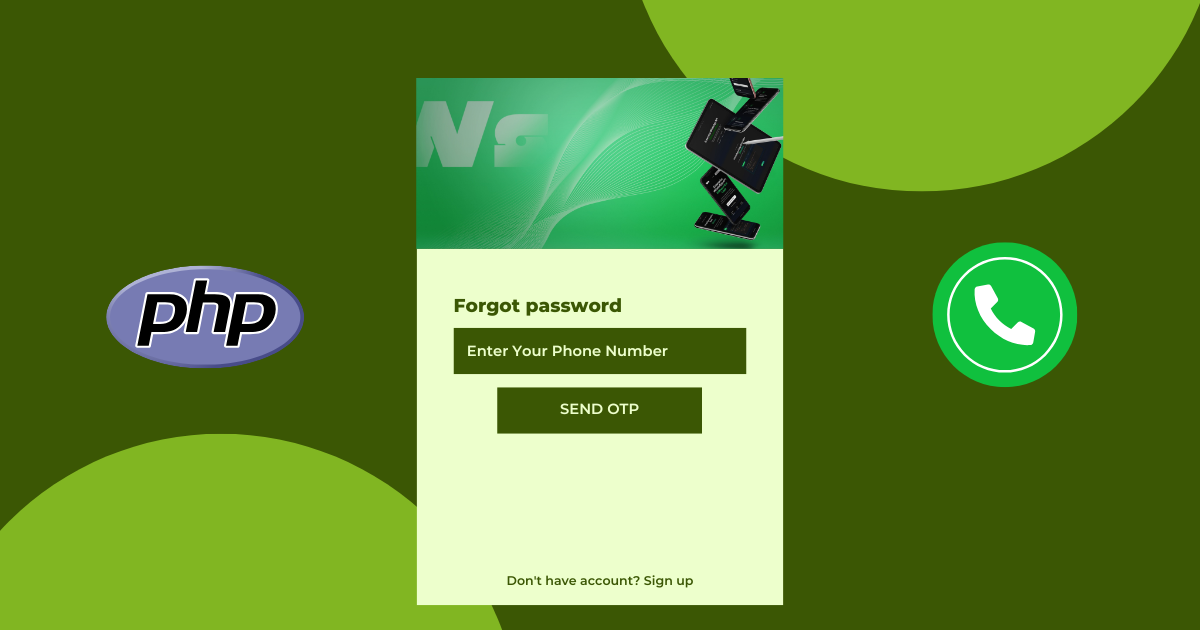
How to Send OTP for Password Recovery Using PHP And Whatsapp API
Learn how to send OTPs for password recovery using PHP and Whatsapp API. This guide covers the step-by-step process of integrating WhatsApp OTPs, providing a secure and efficient solution for user authentication. Discover how to generate and send OTPs, validate them, and enhance security using the reliable WASenderAPI for seamless password recovery