
How to Schedule WhatsApp Messages via API: The Ultimate Developer's Guide
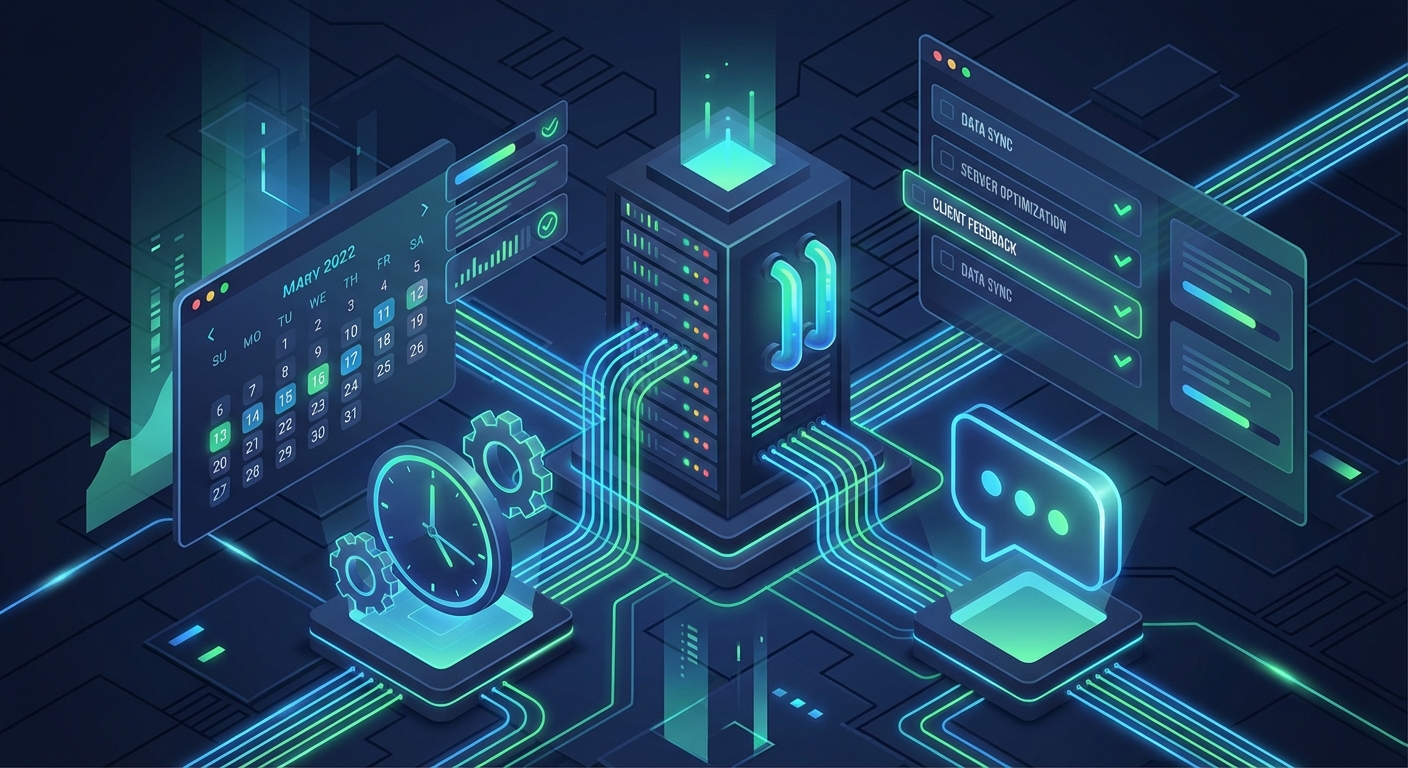
Mastering Automated Communication: Why Timing is Everything
In the world of automated communication, timing is arguably the most critical factor for success. If you want to maximize open rates, drive customer engagement, and reduce opt-outs, you need to schedule WhatsApp messages via API to ensure they arrive at the exact moment your user is most likely to read them. Sending a promotional blast or a critical operational alert at the wrong time of day can lead to immediate frustration and an increased risk of your number being blocked.
Furthermore, building a robust scheduling system allows modern businesses to operate globally without requiring manual, around-the-clock intervention. You can prepare your marketing campaigns, appointment reminders, or operational alerts days or even weeks in advance. The system will automatically handle the heavy lifting, dispatching payloads exactly when dictated by your database logic. This level of automation is what separates basic chatbots from enterprise-grade communication platforms.
In this comprehensive guide, we will explore the architectural patterns, database designs, and best practices required to build a highly scalable message scheduler. Whether you are building a SaaS platform, a CRM, or a logistics tracking system, mastering these concepts will elevate your application's capabilities.
Core Business Use Cases for Message Scheduling
Before diving into the technical architecture, it is important to understand the business drivers behind message scheduling. Different industries have unique requirements for when and how messages should be dispatched.
- Appointment and Booking Reminders: Healthcare clinics, salons, and consulting firms rely heavily on automated reminders sent 24 hours and 1 hour prior to an appointment to drastically reduce no-show rates.
- E-Commerce Drip Campaigns: Abandoned cart recovery sequences are most effective when paced strategically. Sending a gentle reminder one hour after abandonment, followed by a discount code 24 hours later, requires precise queueing.
- Subscription Renewals: SaaS companies and subscription boxes can automate payment reminders days before a credit card is charged, ensuring transparency and reducing involuntary churn.
- Logistics and Delivery Pacing: Delivery drivers cannot manually text every customer. Automated systems schedule ETA updates based on real-time routing data, ensuring customers are informed right before the package arrives.
Architectural Patterns to Schedule WhatsApp Messages via API
When you set out to schedule WhatsApp messages via API, you must choose the right architectural pattern for your backend. Relying on simple, in-memory timers like JavaScript's setTimeout is a dangerous anti-pattern. If your server restarts or crashes, all pending messages are permanently lost. Instead, developers must rely on persistent, stateful architectures.
The Polling Architecture (Cron Jobs)
The most straightforward approach to scheduling is the polling method. In this architecture, you store all pending messages in a relational database like PostgreSQL or MySQL. A Cron job or a scheduled task runner executes a script at regular intervals—typically every minute. This script queries the database for any messages where the scheduled delivery time is less than or equal to the current time and the status is marked as pending.
While this method is easy to implement and perfectly fine for low-volume applications, it can become a bottleneck at scale. Querying a massive database table every sixty seconds consumes significant resources. Furthermore, if the script takes longer than one minute to process the batch, you risk overlapping executions and sending duplicate messages to your users.
The Event-Driven Message Broker Architecture
For high-volume, enterprise-grade applications, developers should utilize an event-driven architecture powered by a message broker like Redis, RabbitMQ, or Apache Kafka. Tools like BullMQ for Node.js or Celery for Python allow you to place a task into a queue with a specific delay or scheduled execution time.
When the scheduled time arrives, the message broker instantly pushes the task to an available worker process. This eliminates the need for constant database polling, drastically reduces latency, and allows you to scale your worker processes horizontally. If your messaging volume spikes, you simply spin up more worker instances to consume the queue faster.
Designing the Database Schema for Your Scheduler
Even if you use a message broker for the actual execution, you must maintain a persistent source of truth in your primary database. This ensures you can display the status of scheduled messages in your user interface and recover gracefully from catastrophic broker failures.
A robust database schema for scheduling should include several critical columns. First, you need a unique identifier for the scheduled task. Next, you must store the recipient's phone number and the exact JSON payload of the message, including any dynamic variables, text, or media URLs.
Most importantly, you need a timestamp column for the scheduled execution time, typically named scheduled_at. You must also track the lifecycle of the message using a status column. The status should transition from PENDING to PROCESSING, and finally to either SENT or FAILED. Tracking the processing state prevents race conditions where two workers might attempt to send the same message simultaneously.
Mastering Timezones and Daylight Saving Time
One of the most notoriously difficult challenges developers face when they schedule WhatsApp messages via API is managing global timezones and daylight saving time (DST) transitions. If a user schedules a daily reminder for 9:00 AM local time, that absolute time shifts depending on the time of year.
The golden rule of backend development is to store every single timestamp in Coordinated Universal Time (UTC). Your database should never know about local timezones. When a user selects a time in your frontend interface, the frontend should immediately convert that local time to UTC before sending it to your backend.
If you are scheduling recurring messages, you must dynamically calculate the next UTC execution time based on the user's saved timezone string (e.g., America/New_York). This ensures that when daylight saving time begins or ends, your system automatically adjusts the UTC timestamp, ensuring the message always arrives at the expected local time.
Handling API Integration and Payload Dispatch
Once your worker process picks up a pending message from the queue, it needs to transmit the payload to your messaging provider. This is where your backend communicates directly with the API infrastructure to dispatch the text, image, document, or interactive button message.
Rather than hardcoding static API calls, your system should dynamically construct the request based on the database row. You should map your internal data structure to the exact JSON schema required by the endpoint. For complete endpoint details, request formats, and authentication methods, please refer to our API documentation.
It is crucial to set appropriate timeouts on these HTTP requests. If the API experiences a temporary latency spike, you do not want your worker process to hang indefinitely. Implement strict timeout limits and ensure your worker can gracefully abort and reschedule the task if the connection drops.
Error Handling, Retries, and Exponential Backoff
No network is perfectly reliable. When you schedule WhatsApp messages via API, you must anticipate failures. The API might be temporarily unreachable, the recipient's phone might be disconnected, or your server might experience a DNS resolution error. Failing silently is not an option.
Your queueing system must implement an automatic retry mechanism using a mathematical concept called exponential backoff. Instead of retrying a failed message immediately and hammering the API, the system should wait progressively longer between each attempt. For example, the first retry might happen after 2 minutes, the second after 4 minutes, the third after 8 minutes, and so on.
You should also implement a maximum retry limit, such as five attempts. If the message still fails after the final attempt, the database status should be updated to FAILED, and an alert should be triggered for your operations team to investigate. This protects your system from infinite loops and wasted processing power.
Compliance, Rate Limiting, and Anti-Ban Pacing
Scheduling is not just about sending messages at future dates; it is a vital tool for pacing bulk broadcasts to protect your sender reputation. Sending 10,000 messages in a single second is a massive red flag for spam filters and will almost certainly result in your number being banned.
To avoid this, you must use your scheduling architecture to implement rate limiting. Instead of queuing all 10,000 messages for immediate dispatch, your system should drip-feed them. You can add a slight, randomized delay between each message—for instance, spacing them out by 3 to 7 seconds. This mimics human behavior and keeps your sending velocity within safe, acceptable limits.
Additionally, you must respect user opt-outs. If a user replies with STOP, your system must immediately query the database and cancel any pending scheduled messages for that specific phone number. Failing to intercept scheduled messages after an opt-out is a severe violation of compliance and user trust.
Monitoring, Logging, and Webhook Callbacks
A scheduling system is a black box without proper observability. You must implement comprehensive logging for every stage of the message lifecycle. Log when a message is queued, when it is picked up by a worker, and the exact HTTP response code returned by the API.
Furthermore, simply dispatching the message to the API does not guarantee it was read by the user. You must set up webhook endpoints to listen for delivery and read receipts asynchronously. When the API triggers your webhook with a READ status, your system should update the original database row. This closed-loop tracking is essential for calculating the ROI of your scheduled campaigns.
Security Considerations for Queued Data
When storing pending messages in a database or a Redis queue, you are often handling sensitive Personally Identifiable Information (PII). If your system schedules appointment reminders for a medical clinic or OTPs for a financial institution, that data must be protected at rest.
Ensure that your message payloads are encrypted within your database using strong encryption standards like AES-256. Your worker processes should decrypt the payload in memory only moments before dispatching it to the API. This ensures that even in the event of a database breach, the plain-text contents of your scheduled messages remain secure.
Conclusion: Elevating Your Automation Strategy
Building a robust, scalable system to schedule WhatsApp messages via API is a transformative upgrade for any software application. By moving away from manual dispatch and embracing message brokers, exponential backoff, and strict timezone management, you create a seamless, professional experience for your end-users.
Remember that architecture matters. Start with a solid database schema, choose the right queueing technology for your volume, and always prioritize error handling and anti-ban pacing. When you properly schedule WhatsApp messages via API, you unlock a new level of communication automation that drives engagement, saves time, and significantly boosts your operational efficiency.
Related Posts
n8n + WaSenderAPI: Master WhatsApp Automation Without Code (2025 Guide)
Discover the most affordable WhatsApp automation solution only $6/month with WaSenderAPI combined with no-code n8n workflows. Build perfect, custom WhatsApp automations quickly and easily without coding. Follow our step-by-step guide to save costs while creating powerful, scalable, and secure WhatsApp messaging for your business.

Create a Free WhatsApp AI Chat Bot with Python and Gemini (Full Guide)
Learn how to create a free WhatsApp AI chatbot using Python, Google’s Gemini API, and WaSenderAPI. This step-by-step guide helps you build and deploy an intelligent WhatsApp assistant at minimal cost no need for WhatsApp Business API.
How to Send OTP for Password Recovery Using PHP And Whatsapp API
Learn how to send OTPs for password recovery using PHP and Whatsapp API. This guide covers the step-by-step process of integrating WhatsApp OTPs, providing a secure and efficient solution for user authentication. Discover how to generate and send OTPs, validate them, and enhance security using the reliable WASenderAPI for seamless password recovery