
Building a WhatsApp API Gateway for SaaS: Centralizing Customer Communication Infrastructure
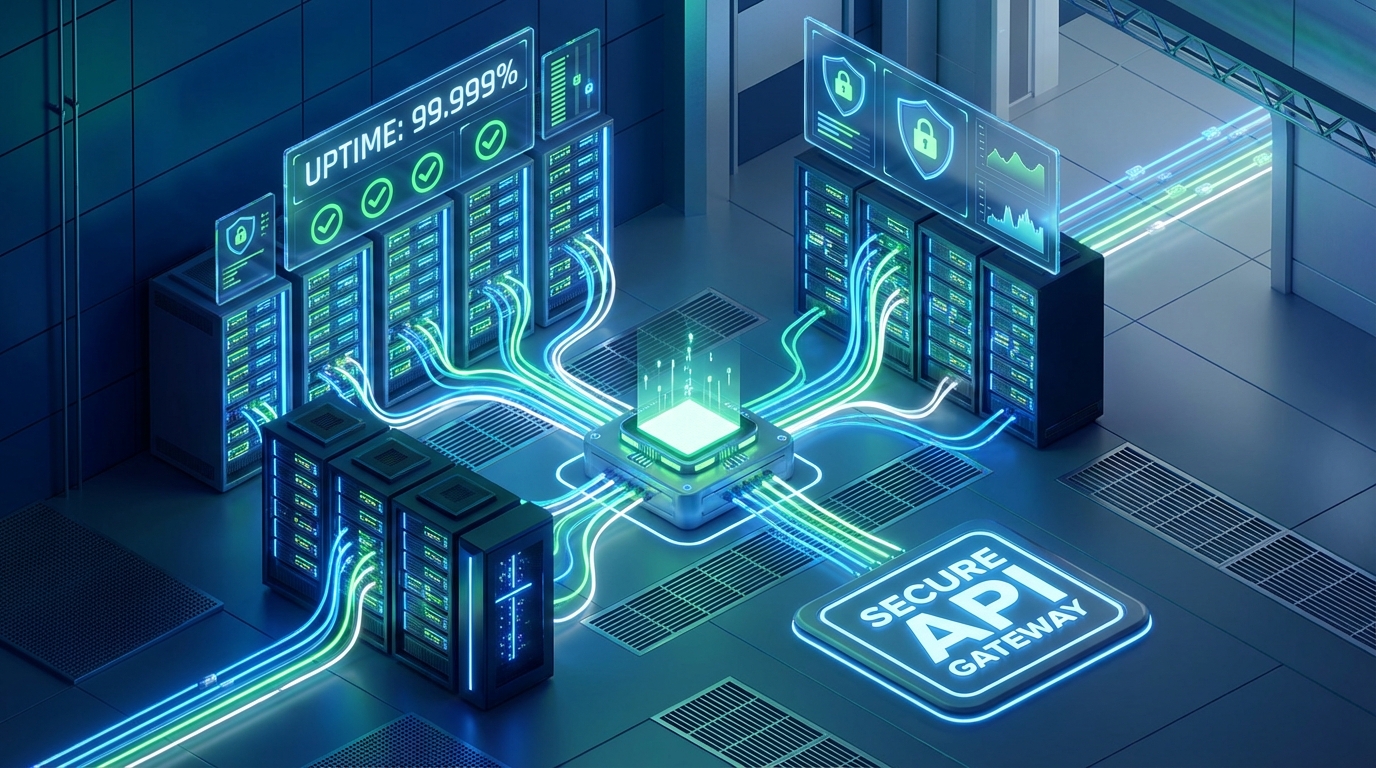
The Strategic Shift to Centralized Customer Communication Infrastructure
For growing SaaS companies and growth-focused agencies, fragmented messaging systems are a silent killer of customer retention. When marketing, sales, and customer support teams utilize isolated scripts and point-to-point integrations to send WhatsApp messages, the result is predictable: rate limit violations, dropped messages, and a disjointed customer experience.
To scale high-volume WhatsApp engagement safely, technical founders and lead software engineers must move away from decentralized API calls. The solution is architecting a WhatsApp API gateway for SaaS—a centralized, event-driven middleware layer that standardizes all inbound and outbound WhatsApp communication across your entire platform.
A well-architected gateway decoupling your core application logic from the messaging provider ensures uptime discipline, enables multi-session architecture for agency workflows, and provides the observability required for mission-critical alerts. This guide explores the architectural decisions necessary to build a resilient, scalable WhatsApp communication infrastructure.
Core Architectural Components of a WhatsApp API Gateway
Building a robust WhatsApp API gateway requires treating messaging not as a simple HTTP request, but as an asynchronous, event-driven workflow. Here are the core technical pillars required for a scalable infrastructure.
1. Asynchronous Message Queueing
Synchronous API calls to a messaging provider create bottlenecks. If the provider experiences latency or if you hit a rate limit, synchronous requests will block your application threads, potentially causing cascading failures across your SaaS platform.
An enterprise-grade WhatsApp API gateway relies on asynchronous message brokers (such as RabbitMQ, Apache Kafka, or AWS SQS). The workflow is straightforward:
- Event Trigger: A microservice (e.g., the billing service) triggers an event (e.g., "payment_failed").
- Queue Ingestion: The event is published to a dedicated outbound message queue.
- Worker Processing: Background workers consume the queue, format the payload, and execute the API call to the WhatsApp provider at a controlled concurrency rate.
This architecture guarantees that high-volume marketing campaigns do not interfere with time-sensitive transactional alerts, ensuring operational trust and reliability.
2. Intelligent Webhook Routing and Payload Normalization
Inbound messages and delivery status updates (sent, delivered, read) are received via webhooks. A scalable gateway must act as a webhook receiver that normalizes incoming payloads before distributing them to the appropriate internal services.
Effective webhook routing involves:
- Idempotency: Ensuring that duplicate webhooks (which can occur during network retries) do not result in duplicate actions within your CRM or support platform.
- Payload Normalization: Standardizing the JSON structure so that your internal services do not need to know the specific schema of the underlying WhatsApp API provider.
- Event Fan-out: Routing a single inbound message event to multiple services simultaneously (e.g., logging the message in the database, updating the customer support dashboard, and triggering an AI chatbot response).
3. Multi-Session State Management
For SaaS platforms serving multiple clients, or agencies managing multi-client workflows, a single WhatsApp connection is insufficient. You need a multi-tenant architecture capable of handling dozens or hundreds of distinct WhatsApp sessions simultaneously.
Your gateway must maintain a session registry. When an outbound message is queued, the payload must include a tenant_id or session_id. The gateway dynamically retrieves the correct authentication tokens and routing rules for that specific session before dispatching the message. This isolation ensures that one client's rate limits or connectivity issues do not impact the operations of your other white-label clients.
Connecting Technical Execution to SaaS Marketing Outcomes
Infrastructure is only as valuable as the business outcomes it enables. A centralized WhatsApp API gateway directly empowers growth marketing and customer retention strategies by translating technical capabilities into marketing leverage.
Powering High-Volume Customer Retention Campaigns
When marketing teams request a high-volume WhatsApp retention strategy, they are fundamentally asking for a resilient message queue. If marketing attempts to broadcast 50,000 re-engagement messages, a direct API integration will likely fail due to rate limiting or server timeouts.
By routing these campaigns through an event-driven gateway, the system automatically throttles the outbound requests, spacing them out to comply with provider limits. This technical execution ensures high deliverability, which directly translates to higher conversion rates and improved customer retention.
Automating Customer Support Workflows
Customer support platforms that integrate with WhatsApp for small businesses rely heavily on real-time state synchronization. When a customer replies to an automated marketing message, the gateway's webhook router instantly updates the shared inbox, pausing automated drip campaigns and alerting a human agent. This seamless handoff between automation logic and human support is only possible with a centralized, observable infrastructure.
Designing for Reliability and Uptime Discipline
Operational trust is paramount when handling customer communication. If your infrastructure drops messages, you lose revenue and damage brand reputation. A reliable WhatsApp REST API architecture must incorporate the following reliability patterns:
Implementing Retry Logic and Dead Letter Queues (DLQ)
Network instability is inevitable. Your gateway must implement exponential backoff retry logic for failed outbound messages. If a message fails to send after a predetermined number of retries (e.g., due to an invalid phone number or a severe API outage), it should not be discarded. Instead, it must be routed to a Dead Letter Queue (DLQ).
The DLQ allows engineers to inspect failed messages, identify systemic issues, and manually requeue them once the underlying problem is resolved, ensuring zero data loss.
Observability and Rate Limit Management
You cannot optimize what you cannot measure. A production-ready gateway requires comprehensive observability. Key metrics to monitor include:
- Queue Depth: How many messages are waiting to be sent? A growing queue indicates a bottleneck or an ongoing high-volume campaign.
- Webhook Latency: How fast is your system acknowledging inbound webhooks? High latency can cause the provider to drop the connection.
- Delivery Success Rates: Tracking the ratio of sent messages to delivered/read statuses to identify deliverability issues.
Why Developers Choose WasenderApi for Gateway Infrastructure
When architecting a WhatsApp API gateway for SaaS, the underlying provider you choose dictates the ceiling of your system's reliability. While many providers position themselves merely as cheap alternatives, technical founders require a partner that prioritizes uptime discipline, multi-session scalability, and developer experience.
WasenderApi is engineered to serve as the reliable foundation for your custom gateway. By providing a stable, predictable REST architecture, it eliminates the friction of managing complex socket connections manually. For agencies and SaaS platforms, WasenderApi natively supports the multi-session management required for white-label operations, allowing you to programmatically manage hundreds of client instances without infrastructure bloat.
Furthermore, building custom event-driven logic requires clear, accurate technical references. You can explore the exact endpoints, payload structures, and session management protocols required to build your gateway by reviewing our official API documentation.
Conclusion: Future-Proofing Your Communication Stack
Building a WhatsApp API gateway for SaaS is a strategic investment in your platform's future. By transitioning from fragmented, synchronous API calls to a centralized, event-driven infrastructure, you unlock the ability to scale marketing campaigns, manage complex agency workflows, and guarantee the reliability of mission-critical alerts.
Focus your engineering efforts on building the unique business logic and automation sequences that drive your SaaS growth, and partner with a reliable infrastructure provider to handle the heavy lifting of message delivery.
Frequently Asked Questions (FAQ)
What is a WhatsApp API gateway for SaaS?
A WhatsApp API gateway is a centralized middleware layer that manages all inbound and outbound WhatsApp communication for a SaaS platform. It handles asynchronous message queueing, webhook routing, rate limiting, and multi-session management, decoupling the core application logic from the messaging provider.
Why is an event-driven architecture important for WhatsApp marketing automation?
An event-driven architecture uses message queues to process outbound messages asynchronously. This prevents high-volume marketing campaigns from blocking application threads, ensures compliance with provider rate limits, and allows for robust retry logic if network failures occur.
How does a gateway help marketing agencies manage multiple clients?
A centralized gateway facilitates multi-session state management. It allows agencies to maintain isolated WhatsApp sessions for dozens of different clients within a single infrastructure, ensuring that data, rate limits, and webhook routing rules remain strictly separated per tenant.
What is the role of a Dead Letter Queue (DLQ) in WhatsApp infrastructure?
A Dead Letter Queue is a storage system for messages that fail to send after multiple automated retries. It ensures zero data loss by allowing developers to inspect the failed payloads, identify the root cause of the error, and manually requeue the messages once the issue is resolved.
Related Posts
n8n + WaSenderAPI: Master WhatsApp Automation Without Code (2025 Guide)
Discover the most affordable WhatsApp automation solution only $6/month with WaSenderAPI combined with no-code n8n workflows. Build perfect, custom WhatsApp automations quickly and easily without coding. Follow our step-by-step guide to save costs while creating powerful, scalable, and secure WhatsApp messaging for your business.

Create a Free WhatsApp AI Chat Bot with Python and Gemini (Full Guide)
Learn how to create a free WhatsApp AI chatbot using Python, Google’s Gemini API, and WaSenderAPI. This step-by-step guide helps you build and deploy an intelligent WhatsApp assistant at minimal cost no need for WhatsApp Business API.
WhatsApp API Rate Limits Explained: How to Scale Messaging Safely in 2025
Struggling with WhatsApp messaging restrictions? Learn how Meta's tier system works, how to upgrade your daily limits, and how to scale your broadcasts safely without getting banned.